 Some skeptics challenge the historical evidence for the New Testament by applying a double standard: (1) near or absolute certainty for New Testament history and facts; and (2) a lower standard for other ancient records, such as the histories of Alexander the Great and the Roman emperors. No rational basis supports a two-tiered set of evidentiary standards for analyzing, testing, and authenticating ancient records. Against the same historical standards for other ancient records, the New Testament has an unmatched record for reliability and authenticity.
This “Historical & Legal Standards” Section addresses three fundamental evidentiary issues.
- Burden of Proof: How much evidence is needed?
- Evidentiary Standards: What historical or legal criteria apply to evaluating evidence?
- Burden to Respond: When one party offers evidence, what must the opposing party do?
1. Burden of Proof: How Much Evidence is Needed?
When you are offering evidence, you generally only need slightly more evidence than the other party to win. Both historians and legal professionals refer to this standard as a test of “probability” or a “preponderance of evidence.”
As a practical matter, whoever has the stronger evidence wins. Similarly, more evidence is generally better than less evidence in determining facts.
 Probability & Preponderance of Evidence
Historical Standard: What is “Probable”?
- Probability. “Probability rules the search for evidence” for both “hard” and “soft sciences,” including history.
- Most Likely. “our judgments must be made according to which facts are most likely true in terms of the historical evidence.”
- Not Certainty. “Absolute certainty” is not required.
* Gary Habermas, On the Resurrection: Evidences, pp. 23-24 (2024) (citing multiple sources) (bold added)
 Legal Standard: What is “Probable”?
- Slight Edge. A party must offer “the stronger evidence, however slight the edge may be.” [Black’s Law Dictionary, p. 1301 (9th ed. 2009)]
- Greater Than 50%. “Under the preponderance standard, the burden of proof is met when the party with the burden convinces the fact finder [e.g., the judge] that there is a greater than 50% chance that the claim is true.” [Cornell Law School, Legal Information Institute (2025) (bold added) https://www.law.cornell.edu/wex/preponderance_of_the_evidence ]
- Probable. Evidence is “relevant” when it has “any tendency” to prove a fact as more probable than not. Federal Rule of Evidence 402.
2. Evidentiary Standards: What Historical or Legal Criteria Apply to Evaluating Evidence?

To determine whether an event probably happened, historians rely upon established historical criteria. In many cases, these historical criteria also bear similarities to legal standards for evaluating evidence. These criteria include the following factors.
- Early Reports. Reports closer to the event are better than reports coming much later.
- Eyewitnesses. Reports based on eyewitness testimony are favored over those without eyewitnesses.
- Multiple Attestation. Events reported by multiple independent sources are stronger than single-source reports.
- Enemy Attestation. Facts admitted by hostile sources (i.e., contrary to their own interest) carry great weight.
- Embarrassment. Embarrassing events or facts are unlikely to be reported unless they are true.
- Consistency/Coherence. Facts that are consistent with other facts receive greater weight.
- Aramaic/Palestinian Terms. Aramaic terms preserved in Greek text likely trace back to New Testament origins.
- Dissimilarity. Unique or unusual events are often more memorable and likely to be recorded.
These criteria have been applied to the analysis of a wide variety of historical sources (both Christian and non-Christian) and by a broad spectrum of scholars. See, e.g., Gary Habermas, On the Resurrection: Evidences, pp. 44-52 (2024); John Meier, A Marginal Jew, Vol. 1, pp. 168-77 (1991); Ed Komoszewski, James Sawyer, & Daniel Wallace, Reinventing Jesus, pp. 39-49 (2006); Benjamin Shaw, Trustworthy, pp. 65-66 (2024); Bart Ehrman, Did Jesus Exist? pp. 40-42 (2012); Justin Bass, The Bedrock of Christianity, pp. 28-29 (2020); Graham Twelftree, Jesus The Miracle Worker, pp. 248-53 (1999); James Beilby & Paul Eddy, eds., The Historical Jesus: Five Views, pp. 40-41, 252 (2009).
These historical criteria are discussed below as follows: (1) applicable historical criterion; (2) rationale for the criterion; (3) parallel legal standard for evidence (if applicable); and (4) Scriptural examples to illustrate how scholars apply them.
Early Reports
Reports closer to the event are better than reports coming much later.
Historical Criterion. “Events that are reported shortly after an event are preferred over those that are reported later.” Benjamin Shaw, Trustworthy, p. 65 (2024).
Rationale. Early reports are better because memories fade and eyewitnesses die, thus raising questions about the accuracy of late reports.
Legal Standard. Courts place greater weight on contemporaneous reports (closer to the time of the event) and discount later reports, such as those that come after the litigation dispute arises. See, e.g., Wynne v. United Technologies Corp., 463 F.3d 1261, 1264 (2006) (relying upon the Air Force witness’ contemporaneous written record, rather than his later oral trial testimony).
Scriptural Examples.
- 1 Thessalonians. Written in AD 50 – within 20 years of Resurrection while Peter, John, Paul, James (brother of Jesus), & other eyewitness remained alive to verify.
- Acts. Written in AD 62 – within 32 years of Resurrection while many of the eyewitnesses remained available to confirm events.
- Early Creeds. Preached within 10 years of Resurrection (e.g., Romans 1:4, 4:24, 10:9; 1 Corinthians 11:23, 11:26, 12:3; Philippians 2:11; Colossians 2:6; Acts 2:25, 4:33, 10:36).“Other exceptionally early examples include the brief sermon summaries that many scholars think are embedded within the Book of Acts and may date to AD 30-40, as well as other ancient creedal traditions found in the New Testament Epistles.” Gary Habermas, On the Resurrection: Evidences p. 44 (2024). “The idea that Christians were telling stories of Jesus’s life, death, and resurrection before Luke, before Mark, and before Paul is held by virtually all scholars of the New Testament, and for compelling reasons.” Bart Ehrman, Did Jesus Exist? p. 261 (2012).
1 Thessalonians (AD 50) (written 20 years after Resurrection of Jesus)

Buddhist Sayings (written “600-900 years after Buddha’s demise”)
Eyewitnesses
Reports based on eyewitness testimony are favored over those without eyewitnesses.
- Historical Criterion. “all history, like all knowledge, relies on testimony.” (p. 5). “The ancient historians – such as Thucydides, Polybius, Josephus, and Tacitus – were convinced that true history could be written only while events were still within living memory, and they valued as their sources the oral reports of direct experience of the events by involved participants in them.” Richard Bauckham, Jesus and the Eyewitnesses, pp. 5, 8-9 (2017).
- Rationale. Eyewitnesses have first-hand experience about the events to which they testify and can be questioned at the time by those recording their testimony.
- Legal Standard. Federal Rule of Evidence 602 expressly recognizes that a witness may testify about matters of “personal knowledge” which may be proved by the “witness’s own testimony.” See also Irving Younger, “No. 1: The Art of Cross-Examination,” ABA: The Litigation Monograph Series, p. 3 (1976) (“what did you see or hear or smell or touch or taste”).
- Scriptural Examples.
- John 15:27. “and you will testify also, because you have been with Me from the beginning.” See Richard Bauckham, Jesus and the Eyewitnesses, pp. 115-16 (John 15:27 “closely linked to a requirement of eyewitness presence at all the events of the history of Jesus”).
- Luke 1:2. “just as they were handed down to us by those who from the beginning were eyewitnesses and servants of the word.” See Richard Bauckham, Jesus and the Eyewitnesses, pp. 389-90 (Luke specifies the qualifications to be an eyewitness with “firsthand contact with the events of Jesus’ history”).
- 2 Peter 1:16. “we were eyewitnesses of His majesty.”
- 1 John 1:1. “What was from the beginning, what we have heard, what we have seen with our eyes, what we have looked at and touched with hands, concerning the Word of Life.”
- 1 Corinthians 15:3-7. “and that He appeared to Cephas [Peter], then to the twelve. After that He appeared to more than five hundred brethren at one time, most of whom remain until now, but some have fallen asleep; then He appeared to James, then to all the apostles.”
Multiple Attestation
Events reported by multiple independent sources are stronger than single-source reports.
- Historical Criterion. “Historians prefer to have lots of written sources, not just one or two. The more, obviously, the better.” Bart Ehrman, Did Jesus Exist? p. 40 (2012).
- Rationale. Multiple independent sources are not only hard to fake, but also provide powerful corroboration when they converge on the core facts.
- Legal Standard. While one source is enough to win in court, multiple sources can provide a winning edge as the judge weighs the evidence on both sides. See, e.g., Alloy Surfaces Co. Inc., ASBCA No. 59625 20-1 BCA ¶ 37,574 (prevailing when multiple sources confirmed Government knew about impact of automation on manufacturing efficiency); see also Lee Strobel, The Case for Christ, pp. 19-20 (2016) (describing criminal case where conviction rested upon testimony of single witness, thus confirming that even a single source can suffice).
- Scriptural Examples.
- Jesus’ Existence. “Within one hundred years of his death, primary sources for the existence of Jesus include Paul’s early letters; Matthew, Mark, Luke-Acts, and John; Jewish historian Josephus; Roman historians Tacitus and Suetonius; and Roman governor Pliny the Younger.” Justin Bass, The Bedrock of Christianity, pp. 6-7 (2020).
- Miracles. “As for multiple sources, the evidence is overwhelming. Every Gospel source (Mark, Q, M, L, and John), every evangelist in his redactional summaries, and Josephus to boot affirm the miracle-working activity of Jesus.” John Meier, A Marginal Jew, Vol. 2, p. 2:619 (1994) (italics in original).
- Crucifixion. “The most certain element of the tradition about Jesus is that he was crucified on the orders of the Roman prefect of Judea, Pontius Pilate. The crucifixion is independently attested in a wide array of sources . . . .” Bart Ehrman, The New Testament, p. 256 (2004).
- Empty Tomb. “In the case of the first Easter, there are at least seven ancient sources – the four Gospels, Acts, and the letters of Paul and Peter . . .” Paul Maier, In the Fullness of Time, p. 197 (1991).
Confirming Multiple Sources for Crucifixion
Many facts from antiquity rest on just one ancient source, while two or three sources in agreement generally render the fact unimpeachable
Enemy Attestation
Facts admitted by hostile sources (i.e., contrary to their own interest) carry great weight.
- Historical Criterion. “The criterion of enemy attestation is satisfied when an antagonistic source expresses agreement concerning a person or event when it is contrary to their best interests.” Gary Habermas, On the Resurrection: Evidences, p. 51 (2024).
- Rationale. A hostile source has a powerful incentive not to admit a fact helpful to the other side.
- Legal Standard. Under the Federal Rules of Evidence, an opposing party’s admission against interest is not hearsay and can be used as evidence against the opposing party. Fed. R. Evid. 802(d)(2); see also Wynne v. United Technologies Corp., 463 F.3d 1261, 1264 (2006) (Air Force witnesses admitted not looking at data on which they supposedly relied).
- Scriptural Examples.
- Gospel Miracle. The Jewish scribes effectively admitted that Jesus performed exorcisms by acknowledging the miracle, but instead complaining about how he performed it: “He casts out the demons by the ruler of the demons.” Mark 3:22-30.
- Miracle in Acts. After Peter heals the beggar who had been lame since birth (Acts 3:2-10), Peter asks the priests “if we are on trial today for a benefit done to a sick man, as to how this man has been made well.” Acts 4:9. The Jewish priests admit the fact of the miracle: “For the fact that a noteworthy miracle has taken place through them is apparent to all who live in Jerusalem, and we cannot deny it.” Acts 4:16.
- Empty Tomb. When the guards admitted the tomb was empty, the chief priests and the Pharisees did not deny the empty tomb, but instead “gave a large sum of money to the soldiers” and instructed the soldiers to say: “You are to say, ‘His disciples came by night and stole Him away while we were asleep.’” Matthew 28:12-13; see also Paul Maier, In the Fullness of Time, p. 200 (1991) (“Well into the second century A.D. and long after Matthew recorded its first instance, the Jerusalem authorities continued to admit an empty tomb by ascribing it to the disciples’ stealing the body.”).
Enemy Attestation as Historical Criterion
“And such positive evidence within a hostile source is the strongest kind of evidence and becomes self-authenticating.” [p. 198]).
Embarrassment
Embarrassing events or facts are unlikely to be reported unless they are true.
- Historical Criterion. “When a source admits to an event understood as an embarrassing admission, it adds to the probability that the event occurred.” Benjamin Shaw, Trustworthy, p. 66 (2024).
- Rationale. A witness has a strong incentive not to admit an embarrassing fact unless it is true.
- Legal Standard. Under the Federal Rules of Evidence, a witness’ statement against interest may be used in evidence when the statement was “contrary to the declarant’s proprietary or pecuniary interest.” Fed. R. Evid. 804(b)(3).
- Scriptural Examples.
- Diminished Miracles Due to “Unbelief.” Jesus could only perform a few miracles due to the “unbelief” in “His hometown” of Nazareth. Mark 6:1-6 (“And He could do no miracles there except that He laid His hands on a few sick people and healed them”).
- Healing with Spit. “Taking the blind man by the hand, He brought him out of the village; and after spitting on his eyes and laying His hands on him, He asked him, ‘Do you see anything?’” Mark 8:23. See John Meier, A Marginal Jew, Vol. 2, p. 2:693 (“These concrete details meet not only the criterion of embarrassment but also that of discontinuity – in this case, discontinuity from other miracle stories in the NT.”).
- Unbelief of Jesus’ Brothers. Jesus’ brothers asked Him to perform miracles publicly because “not even His brothers were believing in Him.” John 7:3-5. If untrue, this passage would not have been included, given that it would be embarrassing to Jesus’ brother James, who became a “pillar” of the Jerusalem Christian church after the Resurrection. Galatians 2:9.
- Fearful Disciples. The disciples scattered after the crucifixion, while the women stood by the cross and then went to the tomb. Matthew 27:55-56, 61; 28:1; Mark 15:40-41, 47; 16:1-8; Luke 23:49, 55-56; 24:1-10. Even after hearing from Mary Magdalene that Jesus had risen, the disciples still hid in “fear” behind closed doors. John 20:19. If untrue, these facts would not have been recorded, as this contrast did not reflect well on the disciples who would later lead the church after the Resurrection.
Blind Man of Bethsaida (Mark 8:22-26): The most striking arguments for historicity come, however, from the criteria of embarrassment and discontinuity.
Consistency/Coherence
Facts that are consistent with other facts receive greater weight.
- Historical Criterion. “This criterion requires that an event coheres with what we know of the historical context in which it is situated.” Benjamin Shaw, Trustworthy, p. 66 (2024).
- Rationale. Consistency between facts provides corroboration.
- Legal Standard. As a general rule, the courts should pursue interpretations leading to harmony, not disharmony: a document “must be considered as a whole and interpreted so as to harmonize and give meaning to all of its provisions, and that an interpretation that gives a reasonable meaning to all parts will be preferred to one which leaves a portion of it useless, inexplicable, inoperative, void, insignificant, meaningless [or] superfluous.” See Arizona v. United States, 575 F.2d 855, 216 Ct. Cl. 221, 235-6 (1978).
- Scriptural Examples.
- Son of Man. While some skeptics have argued “Son of Man” means Jesus is merely a man, the Scriptural passages must be read together consistently. Compare Mark 2:8-11 (“But so that you may know that the Son of Man has authority on earth to forgive sins”) with Daniel 7:13-14 (“Son of Man” with divine authority not only over every person and every nation, but “His dominion is an everlasting dominion”).
- Right Hand of God. For skeptics questioning Jesus’ trial before the high priest (Mark 14:61-64; Matthew 26:63-66; Luke 22:67-71), this event must be read consistently with other facts, including: (1) Jesus’ claim of deity (“Son of Man sitting at the right hand of power”) ties back to Psalm 110:1 (“sit at My right hand”) and Daniel 7:13-14 (“Son of Man”); and (2) the fact that Jesus claimed deity at the trial is consistent with the high priest’s reaction (“tearing his clothes”) and condemning Jesus over the alleged “blasphemy.” Mark 15:63-4.
- Undesigned Coincidences. Many Gospel passages fit together like puzzle pieces, with one Gospel providing corroborating details not included in another. For example, why did Jesus wash the disciples’ feet? Because they had just argued about who is greatest. Two Gospels must be read together to show how the foot-washing ties back to the disciples’ dispute. Compare John 13:12-17 (Jesus washes disciples’ feet) with Luke 22:24 (disciples argue about who is greatest). See Lydia McGrew, Hidden in Plain View: Undesigned Coincidences in the Gospels and Acts, pp. 48-51, 67-70 (2017).
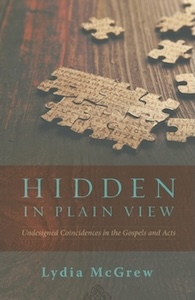
Gospels Fit Together Like Puzzle Pieces
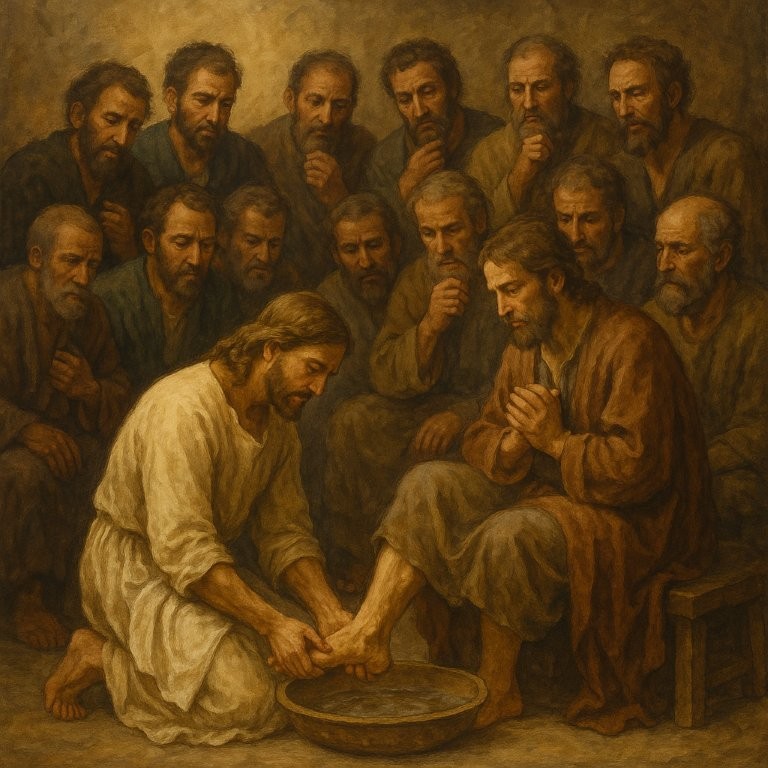
Jesus Washing Feet of Disciples After They Dispute Who is Greatest
Aramaic/Palestinian Terms
Aramaic terms preserved in Greek text likely trace back to New Testament origins.
- Historical Criterion. “Particularly applicable to the historical Jesus, another criterion often applied to Gospel studies is the presence of Aramaic words, substrata, environment, or other indications of a Palestinian origin.” Gary Habermas, On the Resurrection: Evidences, p. 49 (2024).
- Rationale. Unique or unusual terms or facts may be recalled even after memory of ordinary facts fades.
- Legal Standard. No direct evidentiary counterpart exists. However, an unusual fact or term may bear upon a witness’ credibility, explaining how a long-ago event can still be recalled. See, e.g., Irving Younger, “No. 1: The Art of Cross-Examination,” American Bar Association (ABA) The Litigation Monograph Series, pp. 6-7 (1976) (using a memorable example of how a hypothetical New York desk clerk could recall one guest out of millions of guests).
- Scriptural Examples.
- Maranatha. “If anyone does not love the Lord, he is to be accursed. Maranatha.” 1 Corinthians 16:22. See Larry Hurtado, How on Earth Did Jesus Become a God? pp.36-7 (2005) (“widely accepted” that Aramaic term “maranatha” (“O Lord, come”) is a “linguistic fragment or actual artifact” of earliest devotion to Jesus).
- Talitha kum. “Taking the child by the hand, He said to her, ‘Talitha kum!’ (which translated means, ‘Little girl, I say to you, get up!’”) Mark 5:41. See Graham Twelftree, Jesus the Miracle Worker, p. 306 (1999) (“Another sign of the antiquity of this story is the presence of the Aramaic command of Jesus to the dead girl, ‘Talitha cum’ (Mk 5:41).”
- Rabboni. “And answering him, Jesus said, ‘What do you want Me to do for you?’ And the blind man said to Him, ‘Rabboni, I want to regain my sight.” Mark 10:51. See John Meier, A Marginal Jew, Vol.2, p. 2:688 (1994) (“That the story originated in Aramaic-speaking Palestine is also implied by the way Bartimaeus addresses Jesus when he gropes his way to him: ‘Rabbouni,’ Aramaic for ‘my master’ or ‘my teacher’ (appearing elsewhere in the NT only in John 20:16.”).
“Abba! Father! All things are possible for You; remove this cup from Me; yet not what I will, but what You will.” Mark 14:36.
“For example, the Aramaic invocation Abba (“my own dear Father”) occurs on the lips of Jesus only once in all four Gospels (Mark 14:36), yet many critics ascribe it on other grounds to the historical Jesus.” John Meier, A Marginal Jew, Vol. 1, p. 175 (1991).

Jesus said to her, ‘Mary!’ She turned and said to Him in Hebrew, ‘Rabboni!’ (which means, Teacher).” John 20:16
Dissimilarity
Unique or unusual events are often more memorable and likely to be recorded.
- Historical Criterion. This criterion has been applied in different ways, leading to criticisms about what it means and how to apply it. See, e.g., James Beilby & Paul Eddy, eds., The Historical Jesus: Five Views, p. 40 (2009); Gary Habermas, On the Resurrection: Evidences, pp. 47-49 (2024) (“rather skeptical criterion”) John Meier, A Marginal Jew, Vol. 1, p. 172-74 (1991) (summarizing some of the criticisms). The criterion has been described as follows.
- The criterion “focuses on words or deeds of Jesus that cannot be derived either from Judaism at the time of Jesus or from the early Church after him.” John Meier, A Marginal Jew, Vol. 1, p. 171 (1991).
- “This test is valuable in recovering the distinctive aspects of Jesus’ ministry.” Graham Twelftree, Jesus the Miracle Worker, p. 306 (1999).
- Rationale. Unique deeds or sayings of Jesus must have originated with Jesus.
- Legal Standard. No direct evidentiary or legal counterpart exists.
- Scriptural Examples.
- Abba. “Abba! Father! All things are possible for You; remove this cup from Me; yet not what I will, but what You will.” Mark 14:36. See John Meier, A Marginal Jew, Vol. 1, p. 175 (Aramaic term “Abba” only occurs once in four Gospels, making it a unique term that “many critics ascribe . . . to the historical Jesus.”).
- Son of Man. “Jesus’s ‘Son of Man’ sayings are multiply attested in all five Gospel sources. In a well-known application of the principle of dissimilarity, it can also be shown that this terminology is unaccounted for by either Jewish or early Christian teachings.” Gary Habermas, On the Resurrection: Evidences, p. 48 (2024).
- Healing with Spit. “Taking the blind man by the hand, He brought him out of the village; and after spitting on his eyes and laying His hands on him, He asked him, ‘Do you see anything?’” Mark 8:23. See John Meier, A Marginal Jew, Vol. 2, p. 2:693 (“These concrete details meet not only the criterion of embarrassment but also that of discontinuity – in this case, discontinuity from other miracle stories in the NT.”)

Jesus Praying in Garden of Gethsemane (Mark 14:36)

Son of Man Coming with the Clouds of Heaven (Mark 14:62)
3. Burden to Respond: When Confronted by Evidence, What Must Be Done?
When one party shows up with multiple witnesses and sources, what does the other party need to do? In both the history arena and the courtroom, this problem arises too commonly.
- Party # 1 brings witnesses and records to support its case.
- Party # 2 shows up empty-handed, baldly denying the evidence against it.
For the courtroom, Party # 2 has a losing strategy. A leading Supreme Court decision explains that Party # 2 either needs to show up with rebuttal evidence or be ready to lose.
Anderson v. Liberty Lobby, Inc., 477 U.S. 242 (1986)
- Summary. Evidence must be contested with evidence.
- Key Facts.
- Anderson submitted evidence: “spent a substantial amount of time researching and writing,” obtained facts “from a wide variety of sources,” and submitted written testimony (“affidavit with an appendix” detailing the “sources”). [p. 245]
- Liberty Lobby did not submit evidence: only allegations and denials.
- Holding. Party (Liberty Lobby) without evidence lost.
- Rationale. Opposition must offer specific facts, not just allegations and denials.
“a party opposing a properly supported motion for summary judgment may not rest upon mere allegations or denials of this pleading, but must set forth specific facts showing that there is a genuine issue for trial.” [p. 256 (bold added)]
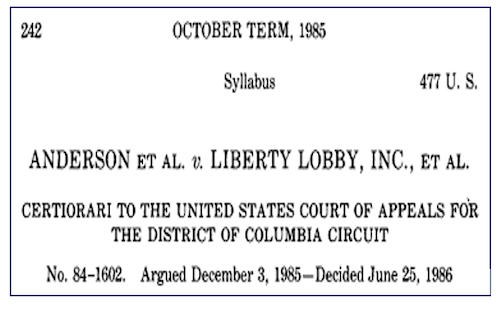
In summary, a party cannot show up to an evidence fight without evidence. Such a strategy is a loser. See e.g., Wynne v. United Technologies Corp., 463 F.3d 1261, 1267 (2006) (contractor won where it submitted evidence, while “Air Force did not assert any additional evidence establishing such reliance before either the Board or this court”); David Z. Bodenheimer, Defective Pricing Handbook, pp. 308-16 (2025) (summarizing cases where party lost due to lack of proof or conclusory allegations).