
The New Testament rests upon a wealth of eyewitness testimony unparalleled by any other ancient record, as reflected in the Scriptural language itself and confirmed by top experts.
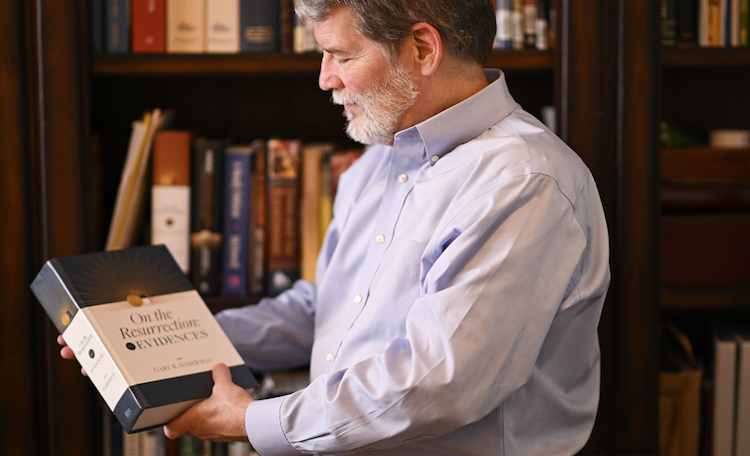
“[A] large contingent of these researchers agree that the New Testament writings were largely written by, under the general control of, or made good use of eyewitness sources, and testimony.” [Dr. Gary Habermas, On the Resurrection: Evidences, pp. 117-18 (2024)]
“The number of eyewitnesses supporting or writing the New Testament accounts is large. . . . No like testimony is possessed for any event from ancient times.” [Dr. Norman Geisler, Christian Apologetics, p. 314 (1976)]
Eyewitness Testimony in New Testament Generally
For both historians and the courtroom, eyewitnesses mean those with first-hand experience about the New Testament events. In other words, witnesses who saw, heard, or even touched the people or things about which they are testifying.
Such testimony readily meets the key legal standard for eyewitness testimony: “What did you see or hear or smell or touch or taste.” Irving Younger (trial attorney & law professor), “The Art of Cross-Examination,” American Bar Association (ABA): The Litigation Monograph Series, p. 3 (1976).
 For more extensive analyses of this Scriptural evidence, Download PDF. Based upon the plain language of the Scriptures, the New Testament contains numerous examples of, and references to, eyewitness testimony and first-hand accounts of witnesses. In the courtroom, judges consistently begin by examining the plain language of a document. For example, the Supreme Court explained that “our analysis begins with the plain language.” Jimenez v. Quarterman, 555 U.S. 113, 118 (2009).
-
- Disciples. “and you will testify also, because you have been with Me from the beginning.” John 15:27 (NASB) [Richard Bauckham, Jesus and the Eyewitnesses, p. 389 (2017) (Verse 27 “closely linked to a requirement of eyewitness presence at all the events of the history of Jesus”)].
- Luke’s Eyewitnesses. “just as they were handed down to us by those who from the beginning were eyewitnesses and servants of the word.” Luke 1:2 (NASB) [Richard Bauckham, Jesus and the Eyewitnesses, pp. 389-91 (2017) (Luke specifies the qualifications of an eyewitness (Greek “autoptai) with “firsthand contact with the events of Jesus’ history”)].
- Peter. “we were eyewitnesses of His majesty.” 2 Peter 1:16 (NASB).
- John. “And he who has seen has testified, and his testimony is true.” John 19:35 (NASB) [Craig Blomberg, quoted in Lee Strobel, The Case for Christ, p. 24 (2016) (“the gospel [of John] is obviously based on eyewitness material as are the other three gospels”)].
- Apostles. “Therefore it is necessary that of the men who have accompanied us all the time that the Lord Jesus went in and out among us – beginning with the baptism of John until the day that He was taken up from us – one of these must become a witness with us of His resurrection.” Acts 1:21-22 (NASB).
- Disciples. “What was from the beginning, what we have heard, what we have seen with our eyes, what we have looked at and touched with hands, concerning the Word of Life.” 1 John 1:1 (NASB).
Eyewitnesses to the Resurrection
By its express language, the New Testament identifies multiple eyewitnesses to the Resurrection of Jesus Christ. This eyewitness testimony to the Resurrection has been corroborated by the earliest Church leaders and record, the leading legal professionals, and the top scholars on eyewitness testimony. Learn More
- The Disciples – Multiple Times & Places
- Jerusalem (without Thomas).“So when it was evening on that day, the first day of the week, and when the doors were shut where the disciples were, for fear of the Jews, Jesus came and stood in their midst and said to them, “Peace be with you.’” John 20:19 (NASB) (bold added); see also John 20:25 (“We have seen the Lord!”).
- Jerusalem (with Thomas). “After eight days His disciples were again inside, and Thomas with them, Jesus came, the doors having been shut and stood in their midst and said, ‘Peace be with you.’” John 20:26 (NASB) (bold added).
- Jerusalem. “To these [disciples/apostles] He also presented Himself alive after His suffering, by many convincing proofs, appearing to them over a period of forty days and speaking of the things concerning the kingdom of God.” Acts 1:3 (NASB) (bold added).
- Galilee. “But the eleven disciples proceeded to Galilee, to the mountain which Jesus had designated. When they saw Him, they worshiped Him; but some were doubtful.” Matthew 28:16-17 (NASB) (bold added).
- Sea of Tiberias. “After these things Jesus manifested Himself again to the disciples at the Sea of Tiberias, and He manifested Himself in this way.” John 21:1 (NASB) (bold added).
- Bethany. “And He led them out as far as Bethany and He lifted up His hands and blessed them.” Luke 24:50 (NASB).
- Ascension. “Therefore it is necessary that of the men who have accompanied us all the time that the Lord Jesus went in and out among us – beginning with the baptism of John until the day that He was taken up from us – one of these must become a witness with us of His resurrection.” Acts 1:21-22 (NASB) (bold added).
- Generally. “He appeared . . . then to the twelve.” 1 Corinthians 15:5 (NASB).
- Simon Peter – Multiple Sources
- “And they got up that very hour and returned to Jerusalem and found gathered together the eleven and those who were with them, saying ‘The Lord has really risen and has appeared to Simon.” Luke 24:33-34 (NASB) (bold added).
- “He appeared to Cephas.” 1 Corinthians 15:5 (NASB).
- “But that disciple whom Jesus loved said to Peter, ‘It is the Lord.’ So when Simon Peter heard that it was the Lord, he put his outer garment on (for he was stripped for work) and threw himself into the sea.” John 21:7 (NASB); see also John 21:15-22 (Peter speaks with Jesus).
- “we were eyewitnesses of His majesty.” 2 Peter 1:16 (NASB).
- Mary Magdalene & Other Women
- Mary Magdalene. “Jesus said to her, ‘Mary!’ She turned and said to Him in Hebrew “Rabboni!’ (which means, Teacher).” John 20:16 (NASB); see also John 20:18 (“Mary Magdalene came, announcing to the disciples, ‘I have seen the Lord,’ and that He said these things to her.”).
- Mary Magdalene & “other Mary.” “And behold, Jesus met them and greeted them. And they came up and took hold of His feet and worshiped him.” Matthew 28:9 (NASB).
- Mary Magdalene, Mary mother of James, & Salome. “And he said to them, ‘Do not be amazed, you are looking for Jesus of Nazarene, who has been crucified. He has risen; He is not here; behold, here is the place where they laid him.’” Mark 16:6 (NASB) (bold added).
- Others (including women). “And they got up that very hour and returned to Jerusalem, and found gathered together the eleven and those who were with them. . . . While they were telling these things, He Himself stood in their midst and said to them ‘Peace be to you.’” Luke 24:33, 36 (NASB) (bold added) [Richard Bauckham, Gospel Women, pp. 281-82 (2002 (“those who were with them included the women as eyewitnesses to the Resurrection)].
- John as Part of Disciples & Individually
- “Therefore that disciple whom Jesus loved said to Peter, ‘It is the Lord.’” John 21:7 (NASB).
- “And he who has seen has testified, and his testimony is true.” John 19:35 (NASB) (bold added); see also John 21:24 (“testifying to these things”).
- “and the life was manifested, and we have seen and testify and proclaim to you the eternal life, which was with the Father and was manifested to us.” 1 John 1:2 (NASB).
- Two Travelers to Emmaus. “Then their eyes were opened and they recognized Him; and He vanished from their sight.” Luke 24:31 (NASB) (bold added).
- James. “then He appeared to James.” 1 Corinthians 15:7 (NASB).
- Apostles. “then He appeared . . . to all the apostles.” 1 Corinthians 15:7 (NASB).
- 500 Persons. “After that He appeared to more than five hundred brethren at one time, most of who remain until now, but some have fallen asleep.” 1 Corinthians 15:6 (NASB).
- Paul. “and last of all, as to one untimely born, He appeared to me also.” 1 Corinthians 15:8 (NASB); see also 1 Corinthians 9:1; Acts 9:1-6; Acts 22:6-10; Acts 26:12-18 (appearance of Jesus to Saul/Paul).